
Dental Bridges Markham
Smile Studio Dental offers personalized bridge solutions to fill gaps and enhance your smile. Schedule a consultation at 905-771-1611.
Transform your smile and boost your confidence with our modern dental bridges right here in Markham, Ontario. Don’t let missing teeth hold you back any longer. Contact us today and take the first step towards a brighter, more complete smile that lasts.
Understanding Dental Bridges
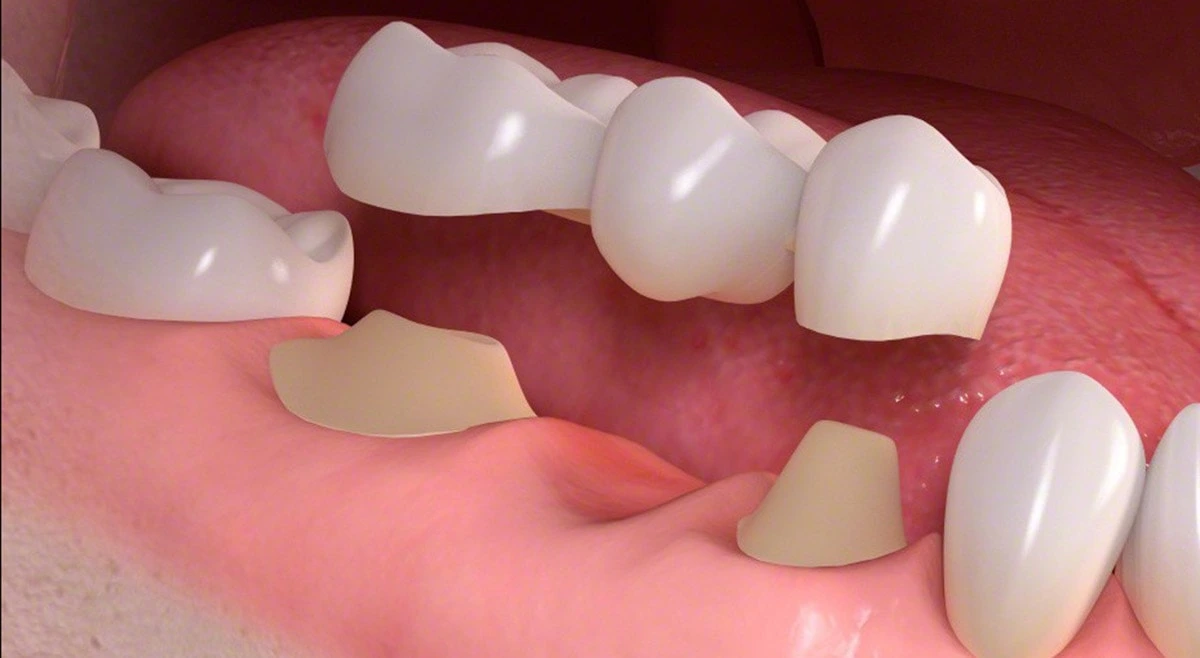
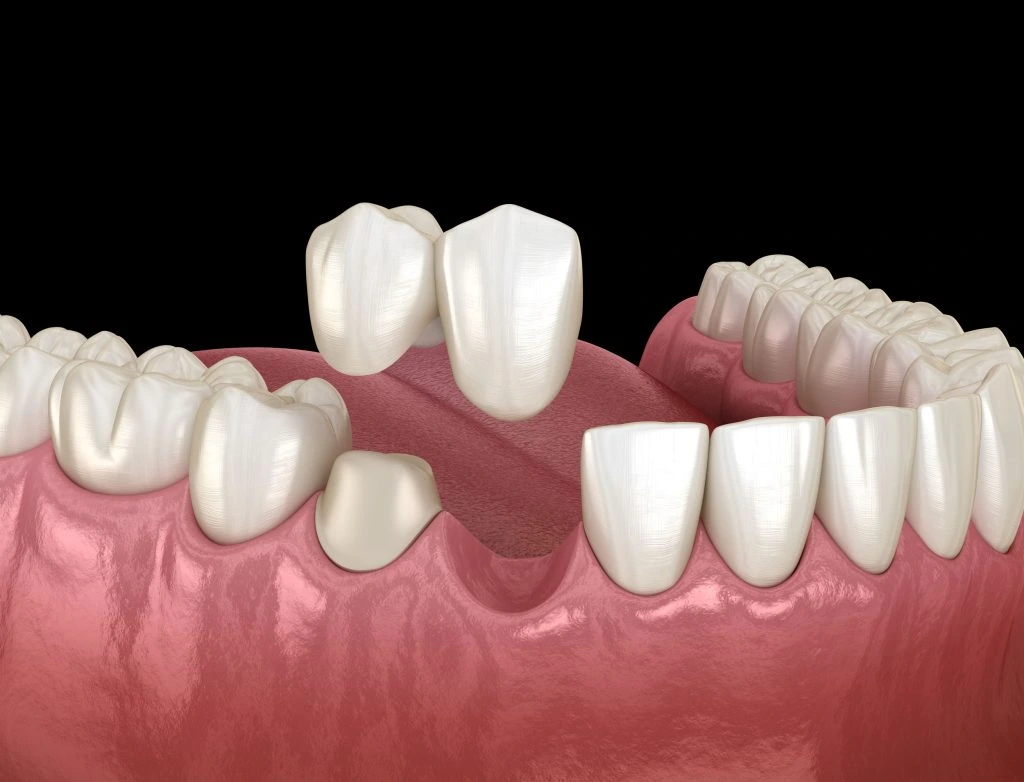
Dental bridges are a tried and true solution for replacing missing teeth. They fill the gap created by one or more missing teeth, using adjacent healthy teeth as anchors. The literal bridge is a prosthesis that includes crowns for the teeth on either side of the gap, with one or more false teeth in between. This not only completes your smile but also makes for easier chewing and better speech by preserving the shape and structure of your face.
Common Dental Issues Requiring Bridges
Several dental conditions can necessitate the need for a dental bridge. These include:
- Missing one or more teeth due to injury, decay, or other health conditions.
- Significant tooth decay resulting in tooth loss.
- Fractures or damage to surrounding teeth that compromise their integrity.
- Congenital absence of teeth, where some individuals are born without certain teeth.
- After tooth extraction procedures, to prevent the shifting of remaining teeth and maintain proper alignment.
Our Dental Bridge Services in Markham, ON
In Markham, our dental clinic is dedicated to providing quality dental bridge services. We utilize the latest in dental technology and techniques to ensure that our patients receive pristine, comfortable, and long-lasting results. Our team of expert Markham dentists has the skill and experience to craft dental bridges that are both functional and aesthetically pleasing.
Utilizing Modern Techniques and Materials
We’re committed to using quality materials and modern methods. By employing modern technologies, such as digital imaging and 3D printing, we produce precise fittings that are durable and match your natural teeth seamlessly.
A Personalized Approach for Each Patient
No two smiles are the same, and we recognize the importance of personalized care for every patient. We take the time to assess your unique dental situation and provide a tailored treatment plan that meets your specific needs and desires.
Ensuring a Comfortable Experience
We understand that dental procedures can be daunting. Our team’s supportive approach, along with the use of sedation dentistry if needed, ensures that your experience is as comfortable as possible.
Benefits of Choosing Dental Bridges
Restoring Proper Chewing and Speech
Bridges facilitate proper chewing and speaking, which can be compromised with missing teeth. They’re designed to be functional, allowing you to eat your favorite foods without any discomfort.
Preventing Adjacent Teeth From Shifting
When a tooth space is left unoccupied, adjacent teeth can shift into the gap, causing issues with alignment. Dental bridges help keep surrounding teeth in their proper positions.
Aesthetic Improvement
Beyond functionality, bridges provide an aesthetic enhancement by filling in unsightly gaps which helps in restoring your smile and your self-confidence.
The Dental Bridge Procedure
Our commitment to excellence is evident in our meticulous dental bridge procedure. Here is a step-by-step overview of what to expect during the process:
1. Initial Consultation: Your dental bridge journey begins with a thorough evaluation during which we discuss your dental history, assess your oral health, and determine if a dental bridge is the best solution for you.
2. Preparation of Anchoring Teeth: The teeth adjacent to the gap (abutment teeth) are prepared for the bridge. This involves reshaping these teeth by removing a portion of the enamel to allow room for a crown to be placed over them.
3. Impressions: Once the abutment teeth are prepared, we take impressions of your teeth. These impressions are crucial for creating a bridge that fits perfectly in your mouth.
4. Temporary Bridge: A temporary bridge is installed to protect your exposed teeth and gums while the permanent bridge is being made.
5. Creating Your Bridge: The impressions are sent to a dental lab, where your custom bridge is crafted. This process ensures that the bridge will match your natural teeth in color and fit snugly for comfort and functionality.
6. Fitting of the Permanent Bridge: When your permanent bridge is ready, you’ll come back for a fitting. We will remove the temporary bridge and place the new one, making any necessary adjustments to ensure a comfortable and precise fit.
7. Final Adjustments and Cementing: Once you and your dentist are satisfied with how the bridge looks and fits, it is cemented into place. This is a critical step as it secures the bridge, ensuring its longevity and functionality.
8. Follow-Up Care: After your bridge has been placed, we’ll schedule follow-up visits to check the fit, and comfort, and to ensure the surrounding teeth and gums remain healthy. We’ll also provide you with care instructions for your new bridge to ensure it lasts for many years.
Why Choose Our Clinic for Dental Bridges?
Experienced and Skilled Dentists
Our team of dentists has extensive experience in performing successful dental bridge procedures. They stay current with the latest advancements in dentistry to provide the best possible care for our patients.
Commitment to Patient Satisfaction
We are dedicated to ensuring our patients are satisfied with their dental bridge treatment. From the first consultation to aftercare, we are committed to delivering a positive dental experience.
A Welcoming Environment
We aim to create a welcoming and comfortable atmosphere for our patients. Our clinic’s warm and friendly environment will put you at ease and make your dental visit a pleasant one.
Schedule a Consultation for Dental Bridges
If you’re considering dental bridge treatment, we encourage you to schedule a consultation with us. During this visit, we will assess your oral health, discuss your needs, and explore the treatment options available to you. Take the first step towards improving your oral health and revitalizing your smile by calling us at 905-771-1611 or visiting our website to book an appointment.
For a comprehensive smile makeover, consider combining dental bridges with other cosmetic treatments like teeth whitening or veneers .
Types of dental bridges explained
Dental bridges come in a few designs, and the right one depends on where the gap sits, how many teeth are missing, and the shape the surrounding teeth are in. During your visit to our Markham office at 8500 Leslie St, Suite 220, we go through each option with you and explain how it applies to your case. Knowing the differences ahead of time can help you feel ready for that conversation.
- Traditional bridge: An artificial tooth is held in place by crowns on the natural teeth on either side of the gap. This design tends to be used when there are healthy teeth on both sides of the missing tooth.
- Cantilever bridge: The replacement tooth is supported by a crown on one side only. This one may come up when there is a natural tooth on just one side of the gap.
- Maryland (resin-bonded) bridge: A framework with wings is bonded to the backs of the neighbouring teeth, which keeps more of the natural tooth intact. It is often used for front teeth, where chewing forces are lighter.
- Implant-supported bridge: Dental implants, rather than natural teeth, anchor the bridge. This may be suggested when several teeth in a row are missing.
No single design is right for everyone. After an examination and any imaging that is needed, our dentists talk through which type fits your oral health, your bite, and your goals so the decision is yours to make.
Bridges compared with implants and partial dentures
When a single tooth is missing, patients in Markham often weigh a bridge against a dental implant or a removable partial denture. Each one differs on treatment time, what it asks of the surrounding teeth, and how you clean it day to day.
- Dental bridge: A fixed restoration that stays put. It usually means reshaping the neighbouring teeth so they can hold the supporting crowns.
- Dental implant: A titanium post set into the jawbone that supports a single crown without touching the teeth beside it. It generally needs a healing period and enough bone to anchor into.
- Removable partial denture: A lower-cost option with no surgery that you take out to clean, though some people find it less steady than the fixed choices.
The right pick depends on your bone health, the shape the nearby teeth are in, your budget, and what you prefer. We are happy to talk through the trade-offs during a consultation and give you cost information in general terms, guided by the Ontario Dental Association Fee Guide. We offer direct insurance billing, accept the Canadian Dental Care Plan (CDCP), and welcome new patients.
Caring for your dental bridge
A dental bridge can serve you well for many years when it is cleaned and looked after. Because the replacement tooth sits above the gum with a small space beneath it, cleaning under the bridge matters just as much as brushing the surfaces you can see.
- Brush twice a day and clean under the bridge with a floss threader, super floss, or an interdental brush to clear out food and plaque.
- Think about a water flosser to help flush debris from under the pontic and around the supporting teeth.
- Keep up with regular checkups and professional cleanings so we can keep an eye on the bridge and the teeth holding it up.
- For the first few days after placement, stick with softer foods and ease back into your usual diet as you adjust. Over the longer haul, going easy on very sticky or hard foods helps protect the restoration.
How long a bridge lasts comes down to daily oral hygiene, the health of the supporting teeth and gums, your bite, habits like grinding, and routine dental care. Staying on top of these gives your bridge the best chance to stay comfortable and do its job.
More Questions Patients Ask
How do I clean underneath a dental bridge?
The space beneath the replacement tooth traps food and plaque, so cleaning there matters. A floss threader, super floss, interdental brush, or water flosser lets you get under the bridge. We can show you the technique that works best for your bridge at an appointment.
What affects how long a dental bridge lasts?
A few things play into it: your daily oral hygiene, the health of the supporting teeth and gums, your bite, habits like teeth grinding, and keeping up with regular dental visits. Staying on top of these helps a bridge keep working over the long term.
Should I choose a bridge, an implant, or a partial denture?
It depends on your bone health, the shape the neighbouring teeth are in, your budget, and what you prefer. A bridge is fixed and leans on the teeth beside it for support, an implant leaves the nearby teeth alone, and a partial denture comes out. We can go over the options with you during a consultation.
What can I eat after getting a dental bridge?
For the first few days it helps to stick with softer foods while you adjust, then ease back into your regular diet. Down the road, going easy on very sticky or hard foods helps protect the restoration and the teeth that hold it up.
Which type of dental bridge is right for me?
The right design depends on where the gap is, how many teeth are missing, and the shape the surrounding teeth are in. After an examination and any imaging that is needed, our dentists in Markham explain whether a traditional, cantilever, Maryland, or implant-supported bridge fits your situation.
Our professional associations
Smile Studio Dental is a member in good standing with the dental community's leading regulatory and education bodies.



Have questions about your treatment?
Call us at 905-771-1611 or request an appointment online — we're happy to help.
Request an Appointment